600×500mm Open-Type Fiber Laser Cutting Machine
A practical open-type alternative to a full-size 1300×2500mm sheet cutter.
For many workshops, a big sheet machine is powerful but more than the job requires. This 600×500mm open-type cutter gives you enough cutting area for signs, logos, brackets, hardware and small metal parts — without the space and cost of a big sheet machine.
Send us your drawing and material thickness. We'll test cut it first, so you see the result before you order.
- 600×500mm open tableload from the top, run long pieces past the edge
- 1000W / 1500W / 2000Wpower options
- Cuts up to 8mm carbon steelreal metal-cutting capability
- Raytools BM110 headwater chiller + modular transmission
- Free sample cutbefore you order
Is This the Right Machine for You?
This machine is a good fit for the right workshop — but not for every one. Here's a straight way to check before you go further.
Likely a good fit if you
- Have a larger workshop with room to spare
- Want a real metal cutter but don't need a full 1300×2500mm sheet machine
- Cut a mix of parts — signs, logos, brackets, hardware, thin jewelry sheet parts
- Want to bring outsourced cutting jobs back in-house
- Like top loading, or cut pieces longer than the table now and then
Probably not the right machine if you
- Cut full metal sheets every day — a 1300×2500mm machine fits that better
- Regularly handle parts larger than 600×500mm
- Work in a small or poorly ventilated space
- Only need marking — logos, serial numbers or QR codes — not cutting
If your workshop is small, or without proper ventilation or smoke extraction, an enclosed model like our 600×600mm keeps smoke and sparks contained. Tell us your setup and we'll point you to the right machine rather than push this one on you.
600×500mm Open-Type or a Full-Size 1300×2500mm Cutter?
Both cut metal well. The real question is how much machine your work actually needs — and how much space and budget you want to commit.
| 600×500mm Open-Type | 1300×2500mm Sheet Cutter | |
|---|---|---|
| Best for | Signs, logos, brackets, hardware, samples and small-batch parts | Full metal sheet cutting and volume production |
| Working area | Practical for small and medium parts | Built for large full sheets |
| Floor space | Compact frame — far less than a full sheet machine | Needs a large dedicated production area |
| Loading | Open frame — top loading, longer pieces past the edge | Open bed for full sheets, needs forklift / crane handling |
| Budget & setup | Lower investment, simpler install and logistics | Higher investment, more install prep, bigger power needs |
| Best reason to choose | Bring cutting jobs in-house without buying a big sheet machine | Daily full-sheet cutting at higher volume |
If most of your work fits inside 600×500mm and you don't cut full sheets all day, the open-type model does the job for far less space and money. Cutting large sheets in volume? Then the 1300×2500mm machine is the right tool — tell us your parts and we'll say so honestly.
See It Cut Before You Decide
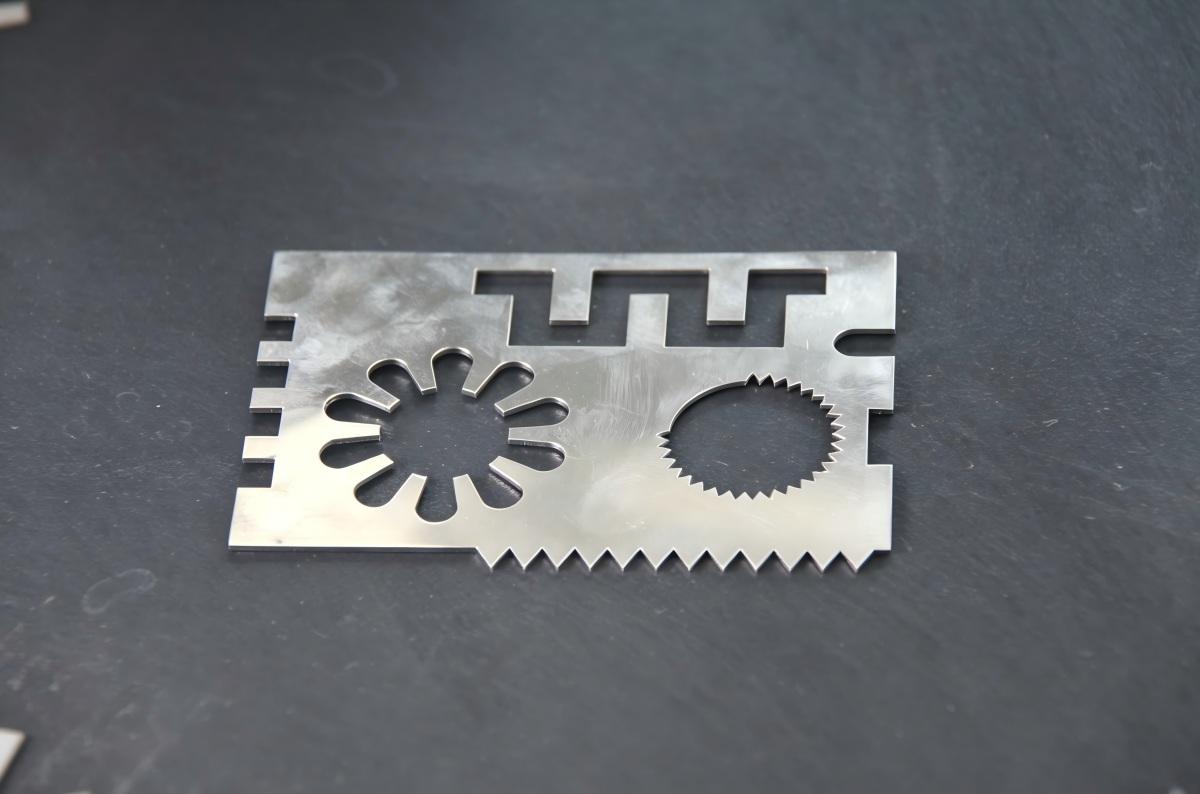
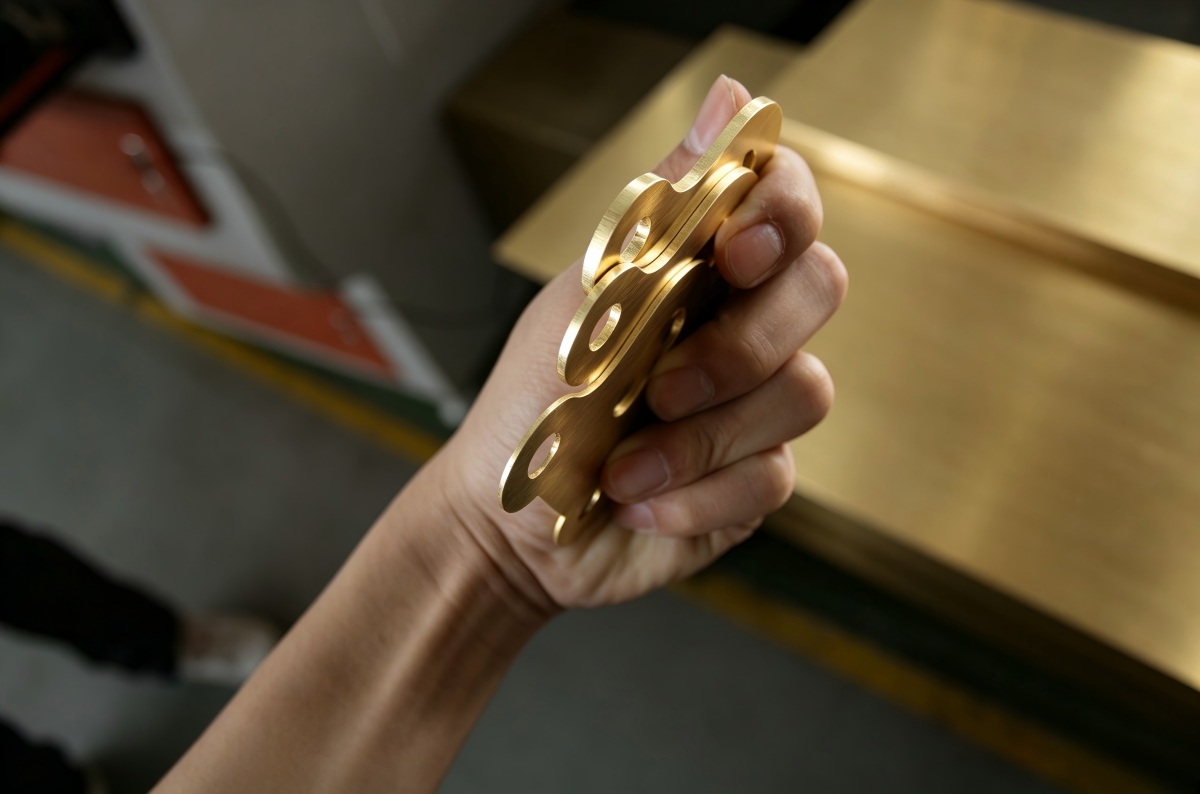
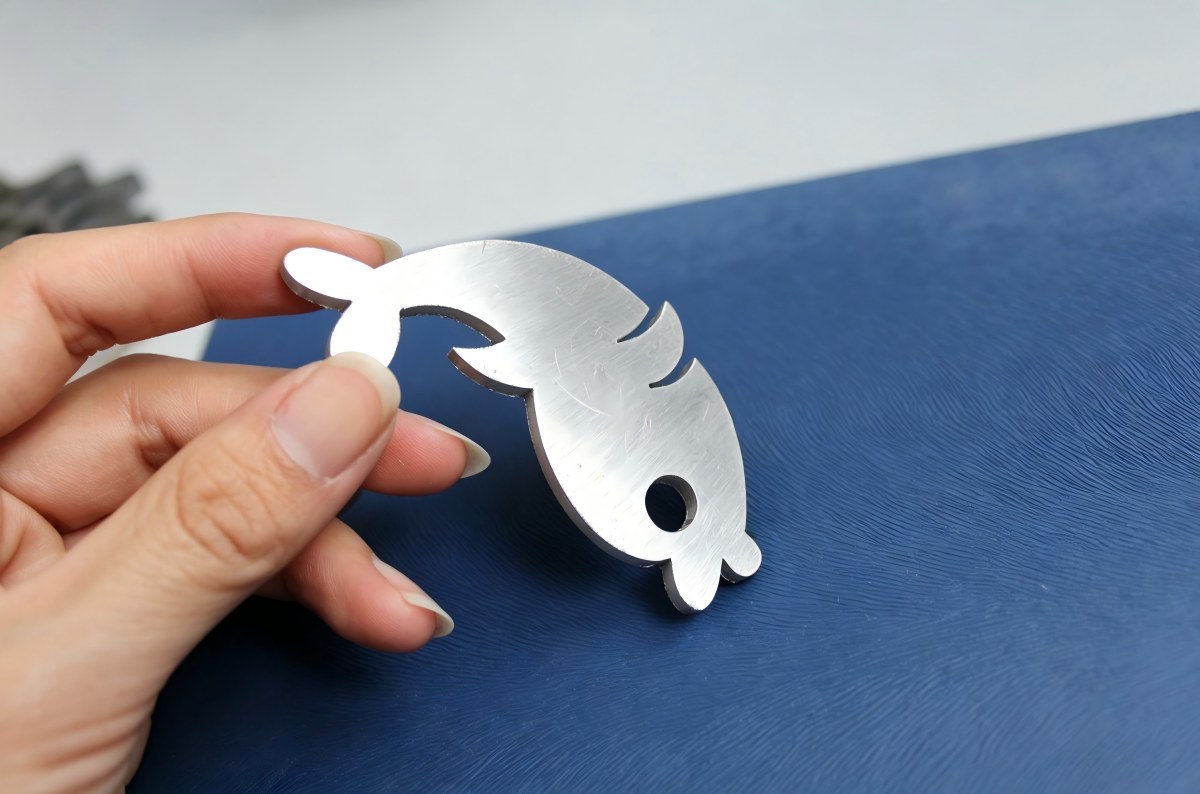
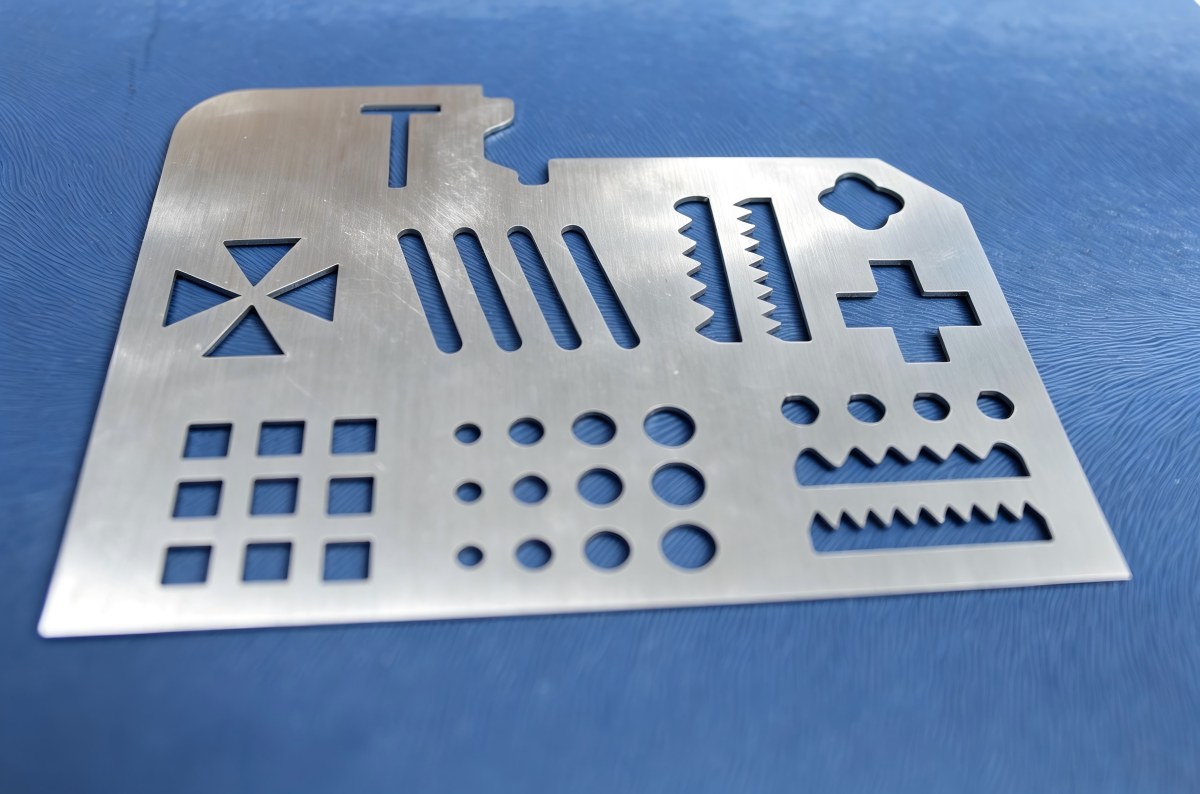
An open-type machine at this price still has to cut clean. Specs only tell you so much — so take a look at real samples and cutting videos below. Don't see your material? Send your drawing and thickness, and we'll cut it for you before you order.
Cutting Samples
Cutting Videos
Match Your Job to the Right Setup
Advertising shops, jewelry makers and metal fabricators all use this machine for different work. The right power comes down to your material, thickness and how much you run a day.
Advertising & Signage
Metal letters, logos, signs and nameplates. The 600×500mm table gives room to lay out several pieces at once, so a batch of signage doesn't mean loading one part at a time.
Jewelry & Precious Metal
Pendants, blanks and small custom pieces in silver, gold or brass. On precious metal, we usually suggest a sample cut first so nothing's wasted.
Metal Fabrication & Parts
Brackets, small panels, covers and custom parts in steel, aluminum or copper. A clean cut means less filing and rework once the part moves down the line.
Bring Outsourced Jobs In-House
If you send small or urgent cutting jobs out to a subcontractor, this machine lets you take that work back — shorter turnaround, easier design changes, and cost you control.
Which power should you choose?
A quick guide to start with — the final call is easiest to make from a sample cut.
The entry option, and enough for most thin-metal work. Good for signage, jewelry pieces and thin stainless, brass or aluminum when speed isn't the first priority.
The balanced pick most shops settle on. Noticeably faster than 1000W on the same parts, which adds up once you're running quantity.
For thicker parts, faster daily output, or reflective metals like brass, copper, gold and silver. The extra power gives more cutting margin when the material or design is more demanding.
Not sure which to pick?
Mostly thin metal and keeping the budget tight? 1000W does the job. Running production most days? 1500W is the safer middle ground. And if thicker parts, brass, copper, silver or gold are in the mix — or you just want more speed — 2000W is the one that won't hold you back later.
Or skip the guessing: send us your material, thickness and drawing, and we'll test cut it and tell you which power fits.
What's Inside the Machine
An affordable open-type machine still needs the parts that matter to be right. The power rating isn't the whole story — here's what's inside that keeps the cut clean and the machine easy to live with.
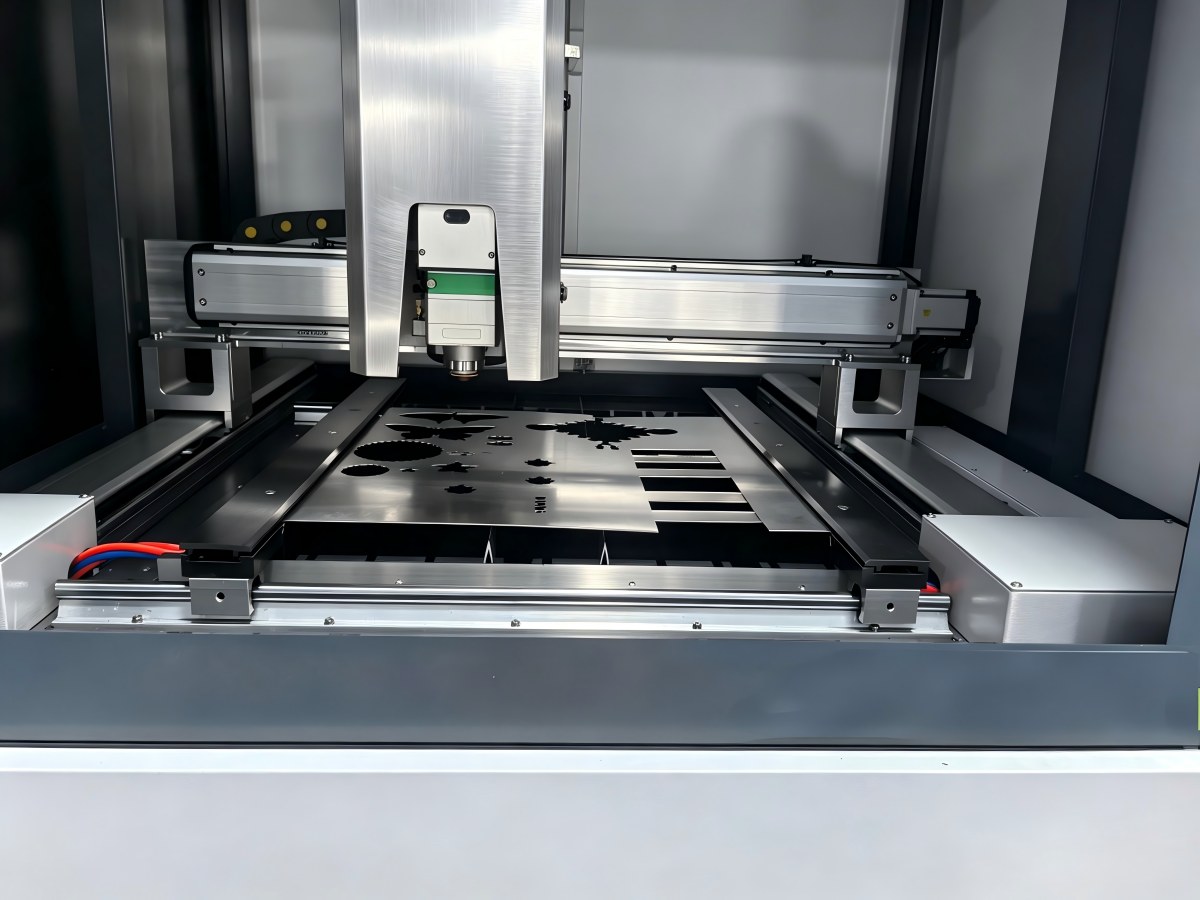
Raytools BM110 cutting head
A stable cutting head keeps the cut smooth on letters, logos, holes and sharp corners — the fine detail where a rough edge would show.
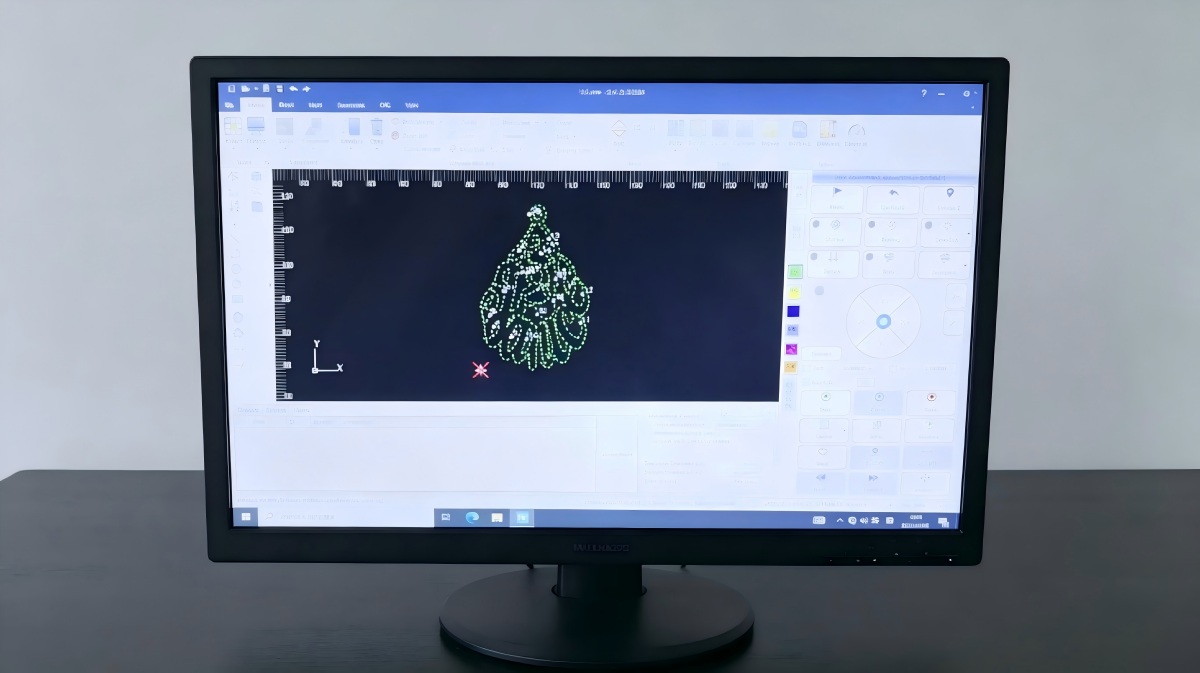
Raytools XC3000 control
Loads your DXF, AI or PLT file and saves the settings with it. When the same job comes back, the operator isn't starting over.
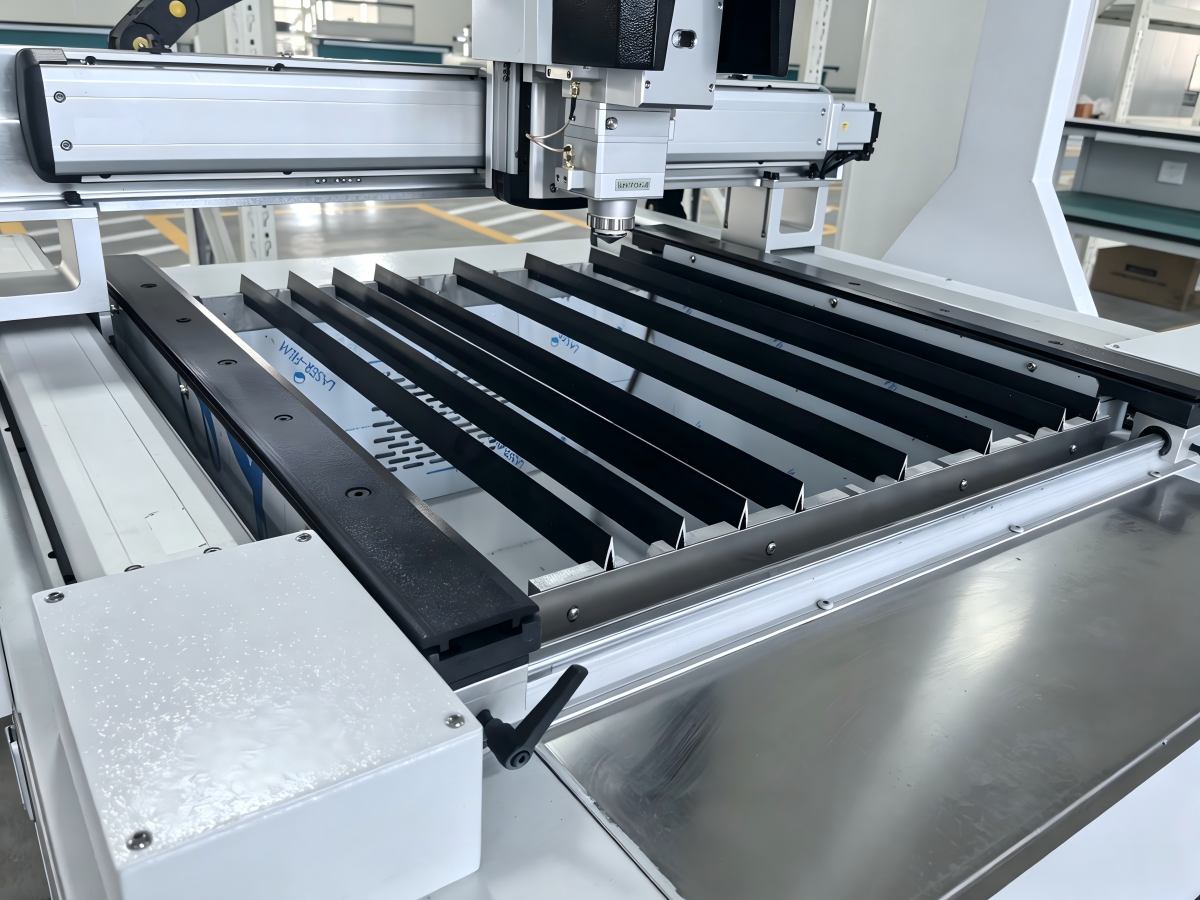
Modular transmission system
The transmission is built in modules, so worn parts are quicker to service and downtime is shorter. It also runs smoothly at speed — up to 30,000 mm/min — while holding accurate, repeatable movement.
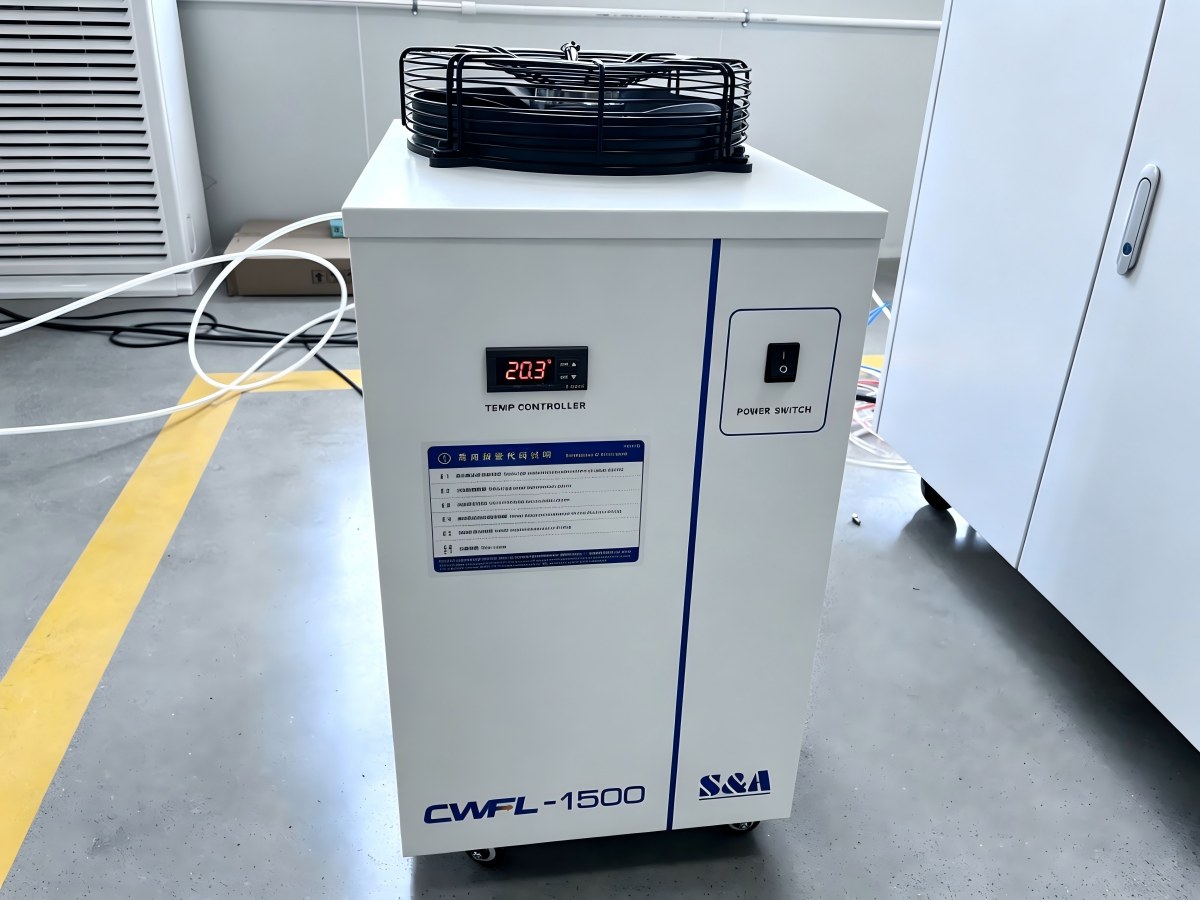
Industrial water chiller
Keeps the laser source at a steady working temperature through longer jobs, which helps the machine run more steadily during batch production.
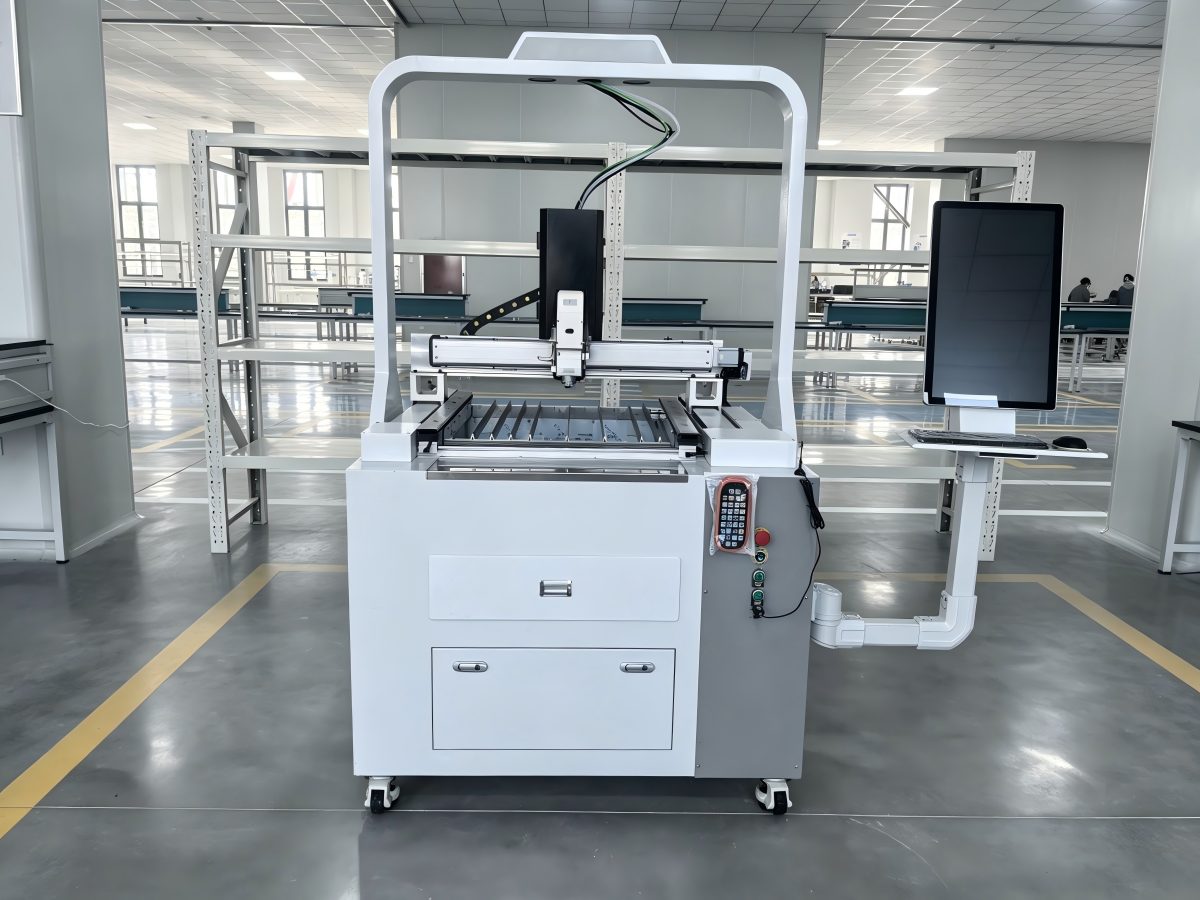
Open-frame structure
The open frame is the main reason many customers choose this model. No enclosure around the bed means you load from the top, use a hoist for heavier plate, and let long pieces run past the table edge. Best in a workshop with room and good ventilation.
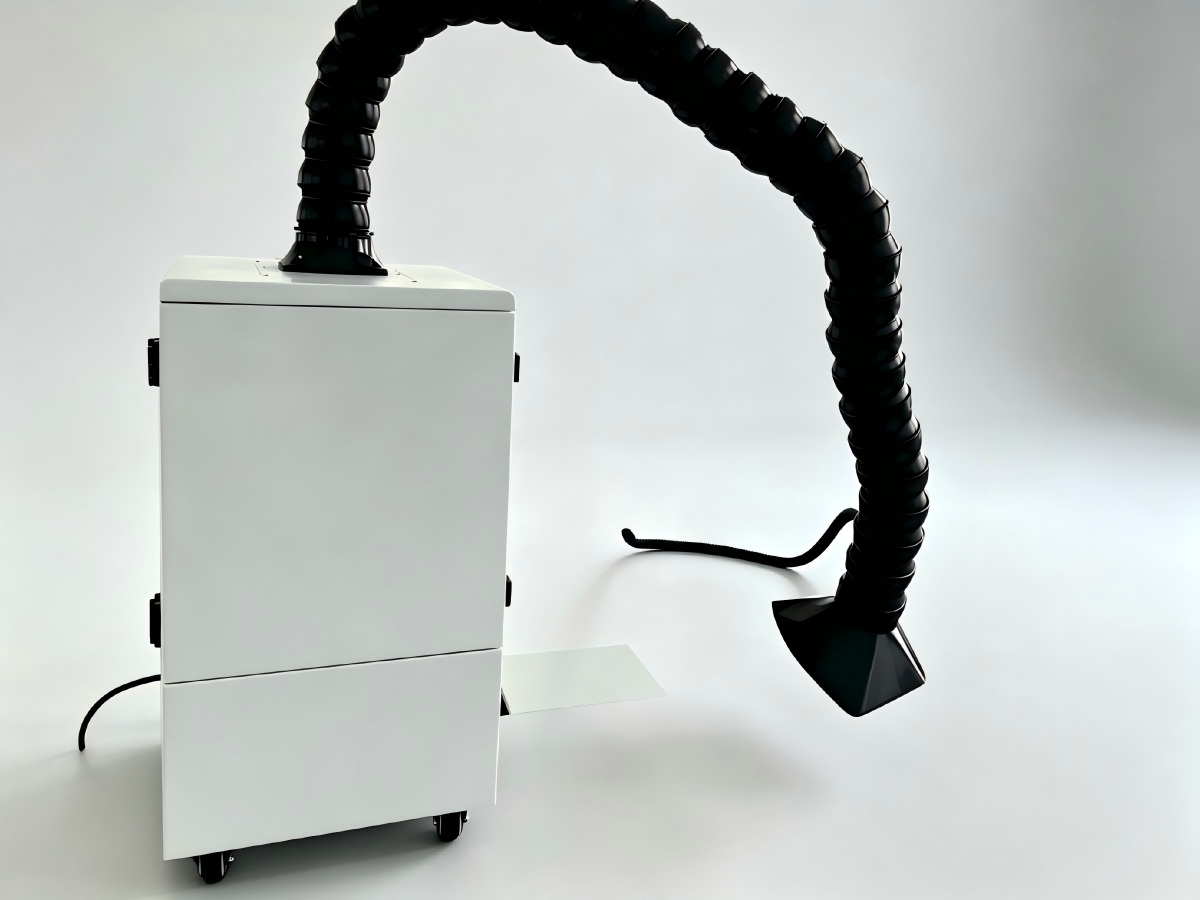
Optional smoke purifier
Cutting stainless or brass indoors every day? Adding this helps reduce cutting smoke and keeps the work area more comfortable.
Technical Specifications
Final configuration is confirmed with you based on your material, thickness and production needs.
| Machine type | Open-type fiber laser cutting machine |
| Working area | 600 × 500 mm (23.6″ × 19.7″) |
| Laser power | 1000W / 1500W / 2000W optional |
| Cutting head | Raytools BM110 |
| Control system | Raytools XC3000 |
| Transmission | Modular transmission system |
| Max cutting speed | Up to 30,000 mm/min |
| Positioning accuracy | ±0.03 mm |
| Repeat positioning accuracy | ±0.02 mm |
| Max cutting thickness | Carbon steel up to 8 mm / stainless up to 6 mm (power-dependent) |
| Supported files | AutoCAD, CorelDRAW, Adobe Illustrator (DXF / AI / PLT) |
| Cooling system | Industrial water chiller |
| Assist gas | Nitrogen / oxygen / compressed air |
| Supported materials | Stainless steel, carbon steel, aluminum, brass, copper, gold, silver |
| Power supply | 220V ±10%, 50/60 Hz |
| Machine dimensions | 1950 × 1450 × 1200 mm |
| Machine weight | Approx. 1000 kg |
| Optional accessory | Industrial smoke purifier |
Cutting thickness depends on laser power, material grade, assist gas and edge quality requirement. A sample test is recommended before final confirmation.
Still weighing 1000W, 1500W or 2000W? Send your material, thickness and drawing, and we'll test cut it and recommend the setup. Send on WhatsApp →
Send a Drawing, Get a Test Cut
The surest way to know this machine fits your part is to see it cut. Here's how that works — and what to send.
How it works
Send your drawing
Material, thickness, part size and a DXF or AI file. We check the design suits laser cutting first.
We test cut it
Your design, on the real machine.
You get video + photos
See the cut, the edge and the holes.
We match the power
1000W, 1500W or 2000W, based on the result.
You get a price
EXW price, accessories, lead time and shipping.
What to send us
- Material and thickness
- Drawing (DXF, AI, PDF or photo)
- Part size and quantity
- Edge quality needed
- Delivery port or address
- Voltage (220V or 380V)
- Certification or language, if any
Quick questions before you send
Yes, one of the most common materials here. The thickness it handles depends on laser power, material grade, assist gas and the edge quality you need — tell us your specs and we'll advise.
All three can be tested. They're reflective metals, so we usually cut a sample first. If you run them often or need more cutting ability, 2000W is usually the better choice.
For signs, logos, brackets and metal parts, it's plenty — and the open frame lets longer pieces run past the edge. If you cut full metal sheets in volume every day, a 1300×2500mm machine fits that better. Tell us your parts and we'll be straight about which one you need.
Thin metal and light volume, 1000W. Steady batches, 1500W. Thicker or reflective metal, 2000W. Full breakdown in the power guide above.
DXF, AI and PLT for cutting. PDF or a photo works for a quick check.
Because the bed isn't enclosed, this machine is best in a larger or well-ventilated workshop, or with an extraction setup. An optional smoke purifier helps. If your space is small or poorly ventilated, an enclosed model like our 600×600mm is the safer choice indoors.
See it cut your part first.
Send a drawing — we'll check the design, cut it, and send the result back before you decide anything.
WhatsApp / WeChat: +86 138 5410 5019 · sales@sismarlaser.com