Zipper Laser Marking Machine for Sliders & Pullers
Place zipper sliders and pullers on the conveyor without aligning each one by hand. The CCD camera locates each part and its angle, then sets the marking position before the laser marks your logo, text or code.
No custom jig to make for every slider style. Send us your parts and your artwork — we'll test the result on your own zippers first, then recommend a setup.

Watch the camera locate and mark zipper parts
One run shows the whole process — software setup through to the finished mark. The other walks through the machine and more marking samples.
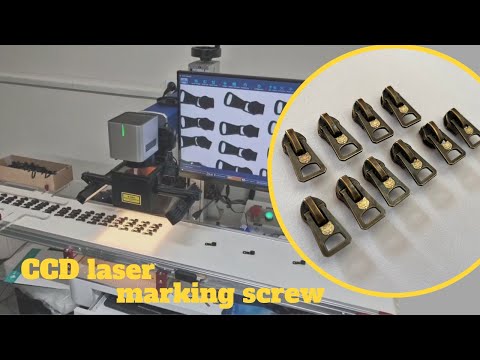
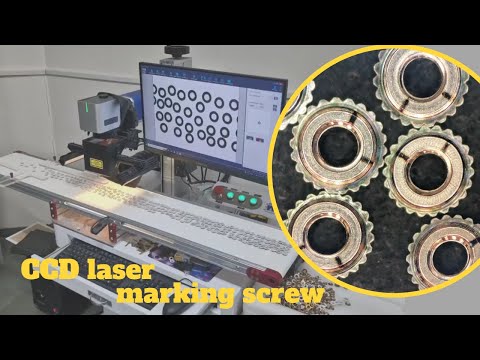
Want to see it on your own parts? Send a few sliders with your logo and we'll mark them free of charge, so you judge the result before you buy. Return shipping is arranged on your side.
Send us your zippers — free marking testThe camera does the positioning, not your operators
A jig for every part, an operator for every piece
Marking zipper sliders the usual way means a jig for each part, an operator placing every piece so the logo lands straight, and rejects when it doesn't. Change the slider style and you're re-tooling again. Ink adds its own trouble — it smears, it fades, and you keep buying consumables.
Load in bulk, the camera finds each part
A worker lays sliders on the conveyor within the camera's field — rough placement is fine, no fixed positions to hit. The camera locates each one and its angle, and the laser marks it in the right spot. Change the logo or code in the software; there's nothing physical to swap.
Four steps, load to mark
Load
Place zipper sliders or pullers onto the conveyor.
Detect
The CCD camera captures the parts within its field and recognizes each one's position and angle.
Position
The software matches the marking graphic to each detected part.
Mark
The part reaches the marking position and the laser marks the logo, text or code.
What it marks
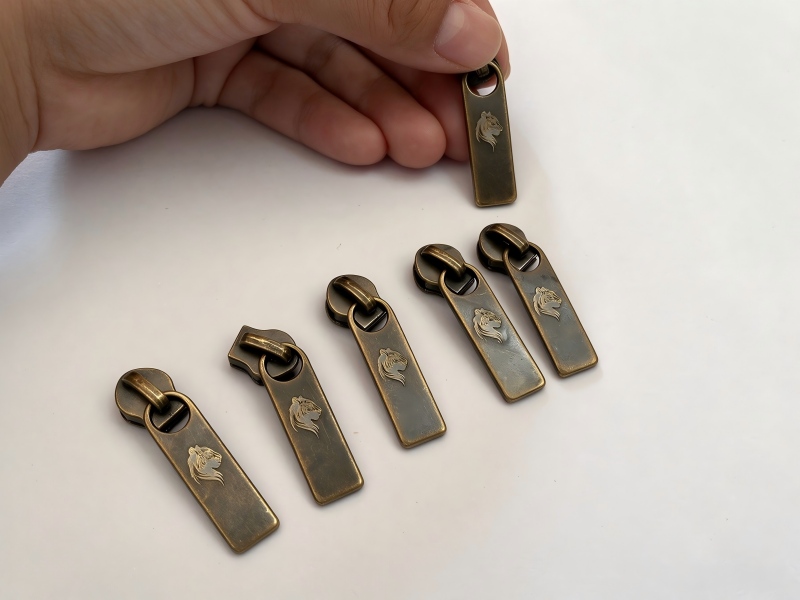
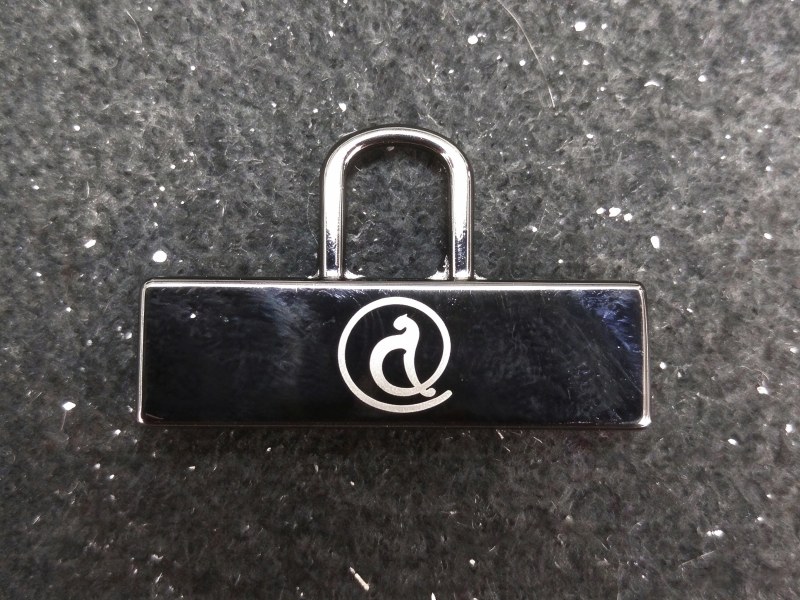
See the mark on the actual part — slider, puller, metal and resin/nylon components.
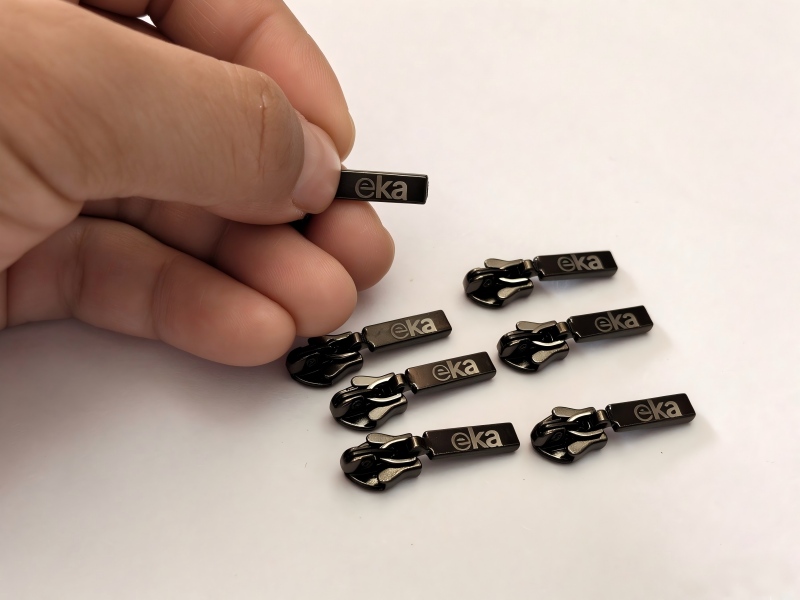
Zipper Slider
Logo / brand name
Zipper Puller
Logo / decorative pattern
Metal Zipper Components
Text / serial / QR code
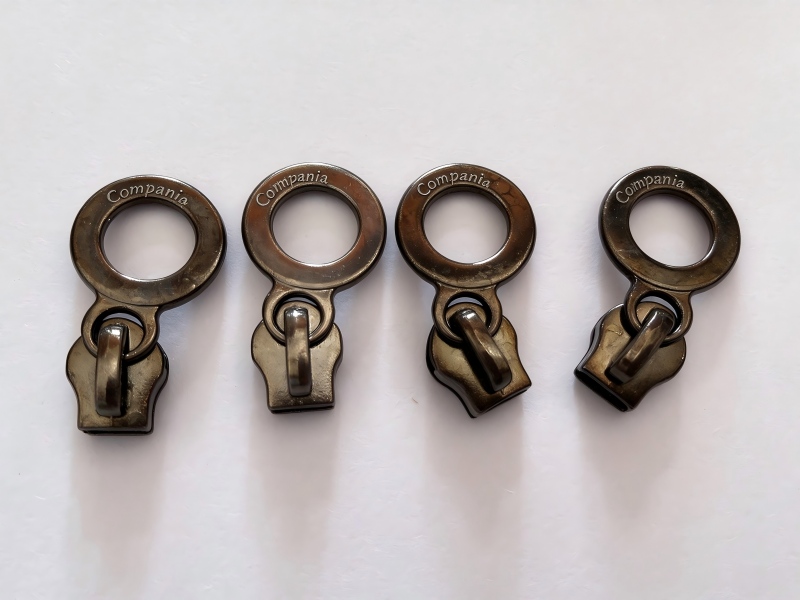
Company Name & Text
Custom text & codes
Machine configuration
Core configuration below. Final marking field, power and setup are confirmed against your parts and your sample test.
| Laser type | Fiber laser |
| Laser power | 60W standard (other power on request) |
| UV option | Available as custom build (heat-sensitive parts) |
| Vision system | CCD automatic recognition & positioning |
| Recognition | Position and angle recognition |
| Marking field | 110 × 110 mm (optional) |
| Feeding method | Conveyor |
| Loading | Manual loading (optional feeding solution) |
| Supported graphics | Logo, text, serial number, QR / Data Matrix, patterns |
| Software | EZCAD + vision positioning software |
| File formats | DXF, PLT, AI, BMP, JPG, etc. |
| Cooling | Air cooling |
| Power supply | 110V / 220V |
| Laser source brand | JPT |
| Warranty | 2 years |
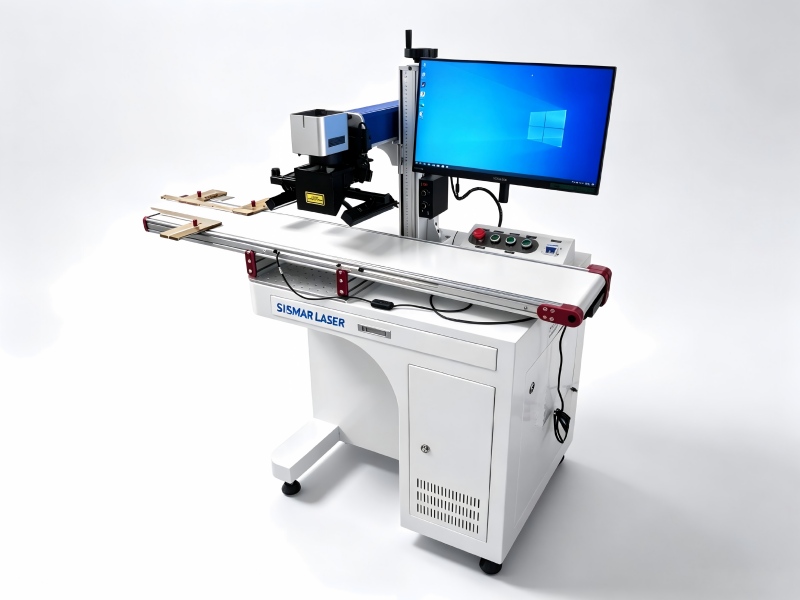
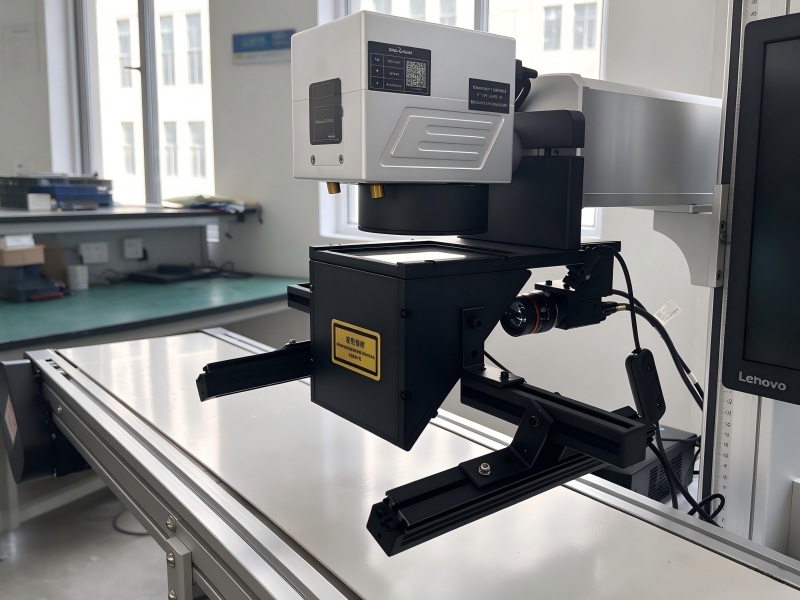
CCD camera & marking head
The vision system that finds each part
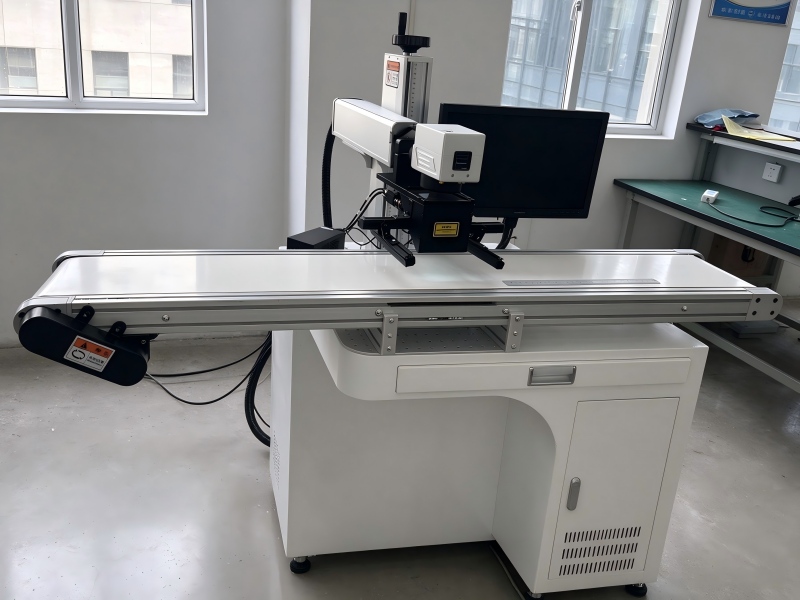
Conveyor loading section
Where operators load the sliders
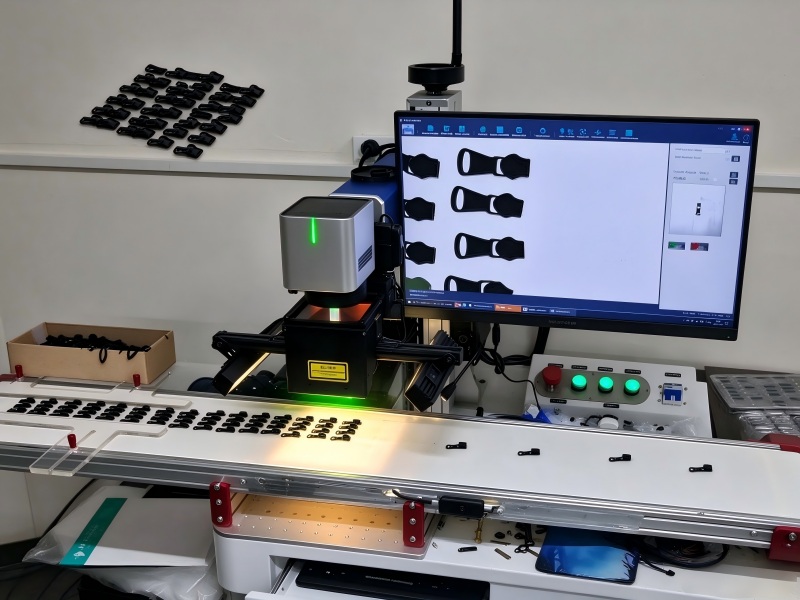
Vision marking software
EZCAD + vision positioning
How we confirm the right setup for you
Sample test & common questions
What makes this different from a normal laser marker?
The camera. A standard marker needs each part placed in a fixed spot; the vision system finds each part within the camera's field, so parts don't need precise positioning and you skip cutting a jig for every size.
Fiber or UV — which do I need?
Metal sliders usually run on fiber. For resin, nylon and other heat-sensitive parts, UV is often the better fit. Since it depends on your material and color, we decide it from your sample test, not by guessing.
Will it damage the part?
It's non-contact. For parts you don't want heat-marked, the UV configuration is the route — confirmed by testing your samples.
Is laser marking permanent?
It marks directly on the material or its coating, with no ink or labels to peel. The exact result depends on the material, coating and laser configuration, which is why we test your samples before production.
Is it hard for operators to run?
Loading is manual and simple; the software handles positioning. We provide manuals, video and remote support.
Send us your zippers. See the result before you buy.
Tell us the material and what you want marked, and we'll run a free test on your own parts.