UV Laser Marking Machine for PP Hollow Sheets
Permanent Marking Directly on Your Production Line
Still using inkjet printing or labels for PP hollow sheets? Ink can fade, labels fall off, and consumable costs keep increasing.
Our UV laser marking machine for PP hollow sheets marks batch numbers, QR codes, logos, dates and traceability information directly on the sheet while it moves on the production line — no stopping, no ink, no extra labeling process.
Available in 5W, 10W and 15W UV laser configurations to match different line speeds and marking requirements.
Not sure which model fits your production? Send us your PP sheet sample and target speed. We will test it in our factory and recommend the right power and setup before quotation.
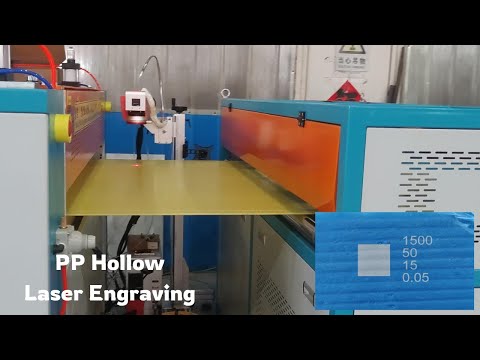
A Mark That Holds Up on PP Hollow Sheets
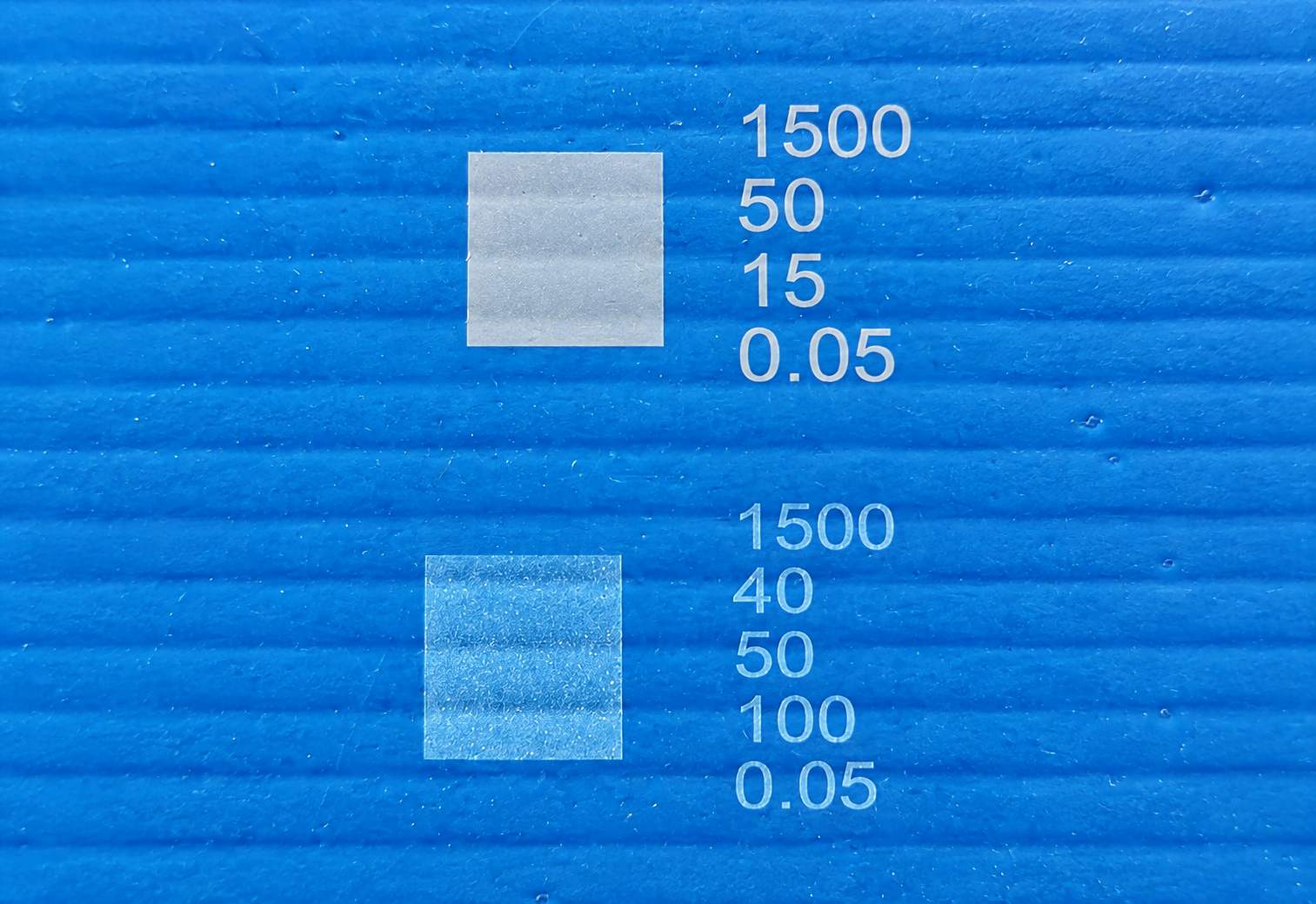
Low-heat marking, so PP doesn’t take the damage
PP doesn’t take heat well — push too much energy into it and you get melting, warping, or a mark that looks scorched instead of clean. Our UV laser (355nm) doesn’t touch the sheet and keeps heat well below that point, so the mark comes out sharp instead of damaged — not a print or stamp that wears or peels off down the line.
- Reads clean, even at small sizes. Line width down to ≤0.1mm, so small text and dense QR codes stay scannable instead of turning into a smudge.
- Less to manage on the line. No ink to refill, no plates to swap between jobs — change the design by loading a new file, not by changing tooling.
PP varies — grade, color and additives all affect how it takes a mark, so we don’t just tell you it’ll work. Send us your actual sheet and we’ll run it under the laser ourselves, send the marked sample back, and recommend the power and setup based on what we actually see — not a spec sheet guess.
Built to Work With Your Production Line
The system marks on the fly as sheets move through — it doesn’t need the line to stop. Sensors and encoder signals can be configured according to your production process.
Sensors detect each sheet and trigger marking automatically as it passes through — exact placement and interface are confirmed against your line layout.
Sensor & Encoder Synchronization
Sensors detect each sheet as it passes; marking is triggered on the fly without stopping the line.
PLC / Host System Integration
RS232, Ethernet or TCP/IP connects the machine to your line’s control system. Depending on the agreed interface, the host system can select stored marking templates and update variable data through that connection.
Design Files & Variable Data
Artwork is prepared from PLT or DXF files. QR codes, barcodes, logos and serial numbers can all be marked as variable data, updating automatically run to run.
Communication and control requirements are confirmed according to your existing production line before production.
Confirm Your Setup With a Free Sample Test
- 1Send us a PP hollow sheet sample and your target line speed.
- 2We test the marking result under UV laser.
- 3We share the marked sample and recommended configuration.
- 4We confirm the power, interface and final specification together.
5W, 10W or 15W UV
Same machine, three power options. The main difference between them is marking speed — higher power keeps up with faster lines. Which one fits your line is exactly what the sample test tells us.
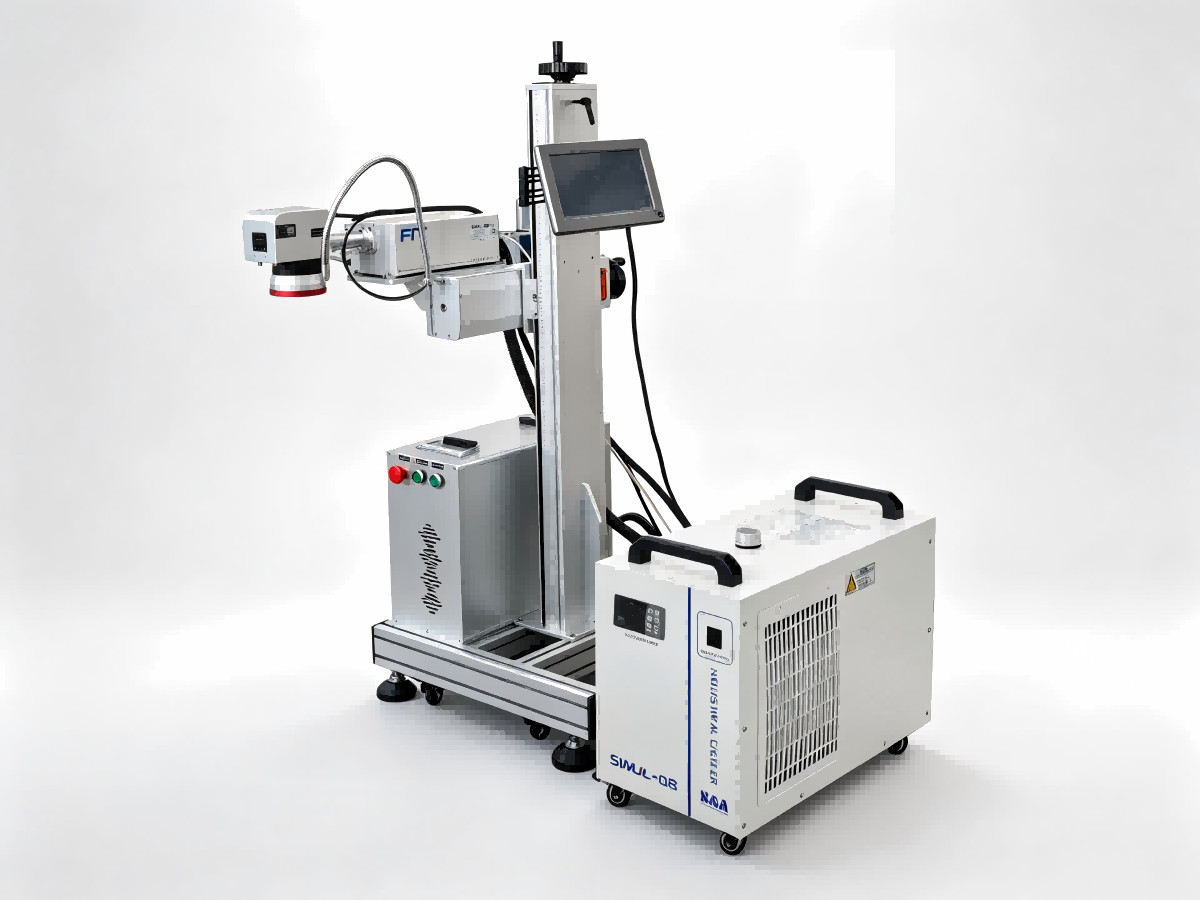
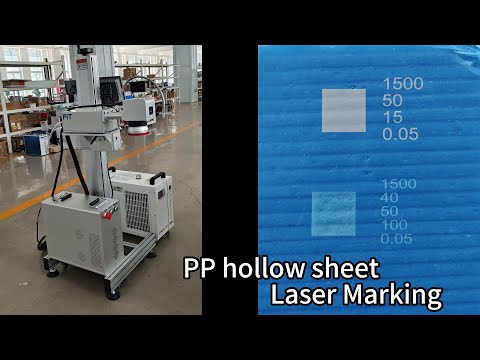
UV Laser Marking — PP Hollow Sheet
The entry point — suits slower lines where marking speed isn’t the limiting factor.
The middle ground for line speed and mark quality — more headroom than 5W without stepping up to the 15W ceiling.
For the fastest lines, where marking still needs to keep pace at higher throughput.
Not sure which one fits? Send us your sheet sample and target line speed — we’ll confirm the right power before quotation.
Check the Numbers
Technical Specifications
| Parameter | Value |
|---|---|
| Laser Type | UV |
| Wavelength | 355 nm |
| Power Options | 5W / 10W / 15W |
| Marking Method | On-the-fly continuous marking |
| Maximum Speed | Up to 200 m/min* |
| Marking Field | Typically a 100×100mm scan lens — height (across the sheet) limited to under 100mm, length (along the line) unlimited since marking is continuous |
| Minimum Line Width | ≤0.1mm, readability depends on material and application |
| Cooling | Air-cooled |
| Supported File Formats | PLT, DXF |
| Communication | RS232 / Ethernet / TCP-IP (PLC integration) |
| Compliance | CE compliant |
*200 m/min is what’s been measured on the standard setup. Your actual speed depends on marking content, character height, number of lines, and repeat spacing — tell us your line speed and what you want marked, and we’ll confirm the real cycle time before you commit.
UV Laser vs. Inkjet, Labels, Pad Printing & Hot Stamping
| UV Laser | Inkjet | Labels | Pad Printing | Hot Stamping / Embossing | |
|---|---|---|---|---|---|
| Consumables | None | Ink, solvent, regular refills | Label stock, adhesive, printer ribbon | Ink, pads, plates | Foil or dies |
| Variable data (batch, date, QR) | Yes | Yes | Yes, if printed labels are used | Limited | No, mostly fixed content |
| Contact with sheet | Non-contact | Non-contact | Contact (applied by hand or machine) | Contact | Contact |
| Mark durability | Permanent on suitable materials | Depends on ink and environment | Can peel, lift or fade, especially with moisture, cold or a textured surface | Can wear or scratch off | Can chip or peel |
| What you’re maintaining | Optics, occasional cleaning | Ink system, nozzles, filters | Label stock, applicators, adhesive, ribbon | Pads, plates, ink | Foil, dies, heating element |
| Typical strength | No consumables, fine detail, permanent | Mature, flexible inline printing | Low cost per unit, no special equipment to apply | Low cost per unit on simple jobs | Established process for fixed logos |
If you’re running inkjet or labels and it’s working, there’s no reason to switch. The move to UV laser tends to make sense when you’re tired of buying ink and consumables, or you need a mark that won’t peel, smear or fade — how it holds up depends on your material, which is part of what the sample test tells you.
Built for These Production Lines
Logistics & Packaging
Batch numbers, QR codes and tracking data marked directly on the sheet for supply-chain traceability.
Construction Materials
Specifications marked onto acoustic panels and similar building-material sheets.
Advertising Displays
Graphics and signage content marked onto display sheets.
Questions We Get Asked
What is UV laser marking?
A high-precision, non-contact method that uses ultraviolet light to permanently mark PP hollow sheets without inks or chemicals.
What’s the real marking speed?
Up to 200 m/min on the standard setup. What you’ll actually get depends on how much content you’re marking, character height, and how tight the repeat spacing is. Tell us your line speed and content, we’ll confirm the real number before you buy anything.
Is it cost-effective compared to inkjet or labels?
The upfront cost is higher than inkjet or labeling equipment, but there’s no ink, no solvent, and no consumables to keep buying — which can reduce running costs over time, depending on your output and consumable use.
Do you need my exact sheet size to quote this?
Not really — we typically use a 100×100mm scan lens, so height across the sheet is limited to under 100mm, but length along the line isn’t limited since marking is continuous. Tell us what you need marked and we’ll confirm the layout fits.
Which power do I need — 5W, 10W or 15W?
Mainly a question of marking speed — higher power keeps up with faster lines. Send a sample and tell us your line speed, and we’ll recommend a power before you order.
Will it talk to our PLC or host system?
Yes — RS232, Ethernet, or TCP/IP connects it to your host computer and PLC. Once it’s wired in, marking triggers automatically off your line’s own sensors.
Ready to see it on your material?
Send us your sheet sample, spec, or line speed — we’ll test it and recommend the right power and field size.